


Continuing:
24.06.2024
2024-07-09
 Başlangıç
Continuing:
24.06.2024
2024-07-09
Change your career, shape the future


Level: Başlangıç

Total Session: 1940

Total Weeks: 48
Total Modules: 13
Language: English


This course is a comprehensive training program aimed at equipping participants with the theoretical knowledge and practical skills necessary for aircraft maintenance technician work. Throughout the training, fundamental topics such as the basics of aerospace engineering, electrical, electronic, and digital techniques are covered. Technical details like aircraft structures, engine systems, avionics, and flight control systems are emphasized to ensure participants gain mastery of real aircraft maintenance processes. Additionally, fault diagnosis, scheduled maintenance activities, and how to keep maintenance records are taught as part of maintenance applications. Participants learn all technical modules defined under EASA Part-66 while gaining regulatory knowledge including the legal framework and maintenance rules set by the European Aviation Safety Agency (EASA). Furthermore, awareness is developed regarding human factors, occupational safety, and safety procedures to be observed in maintenance environments. By the end of the course, with exam preparation stages, practical problem-solving, and interview simulations, participants are ready to embark on a professional career in the industry.
Self-Learning
Lessons
Teamwork
In the module, basic arithmetic operations, algebra, and geometry topics are covered, which form the foundation of the equations to be used in the following modules (Physics, Basics of Electricity and Electronics).
This module interests you?
Apply FormThis module aims to provide basic physics knowledge on matter (structure of atoms, molecules, etc.), mechanics (forces, motion, energy, etc.), thermodynamics, optics (light), and sound.
This module interests you?
Apply FormThis module provides the essential electrical engineering knowledge required for an aircraft maintenance engineer and lays the foundation for the next module, "Basics of Electronics." The content includes electron theory, electricity generation, capacitance, magnetism, inductance, transformers, generators, and motors.
This module interests you?
Apply FormThis module is a continuation of the "Basics of Electricity" module. It provides information about electronic components such as diodes, transistors, and integrated circuits, printed circuit boards (PCBs), and servomechanisms (also known as synchros). There are different versions of this module, B1 and B2; the content is more in-depth for those aiming for the B2 license.
This module interests you?
Apply FormCovers topics such as data, data buses, logic circuits, microprocessors, fiber optic technology, and typical digital aircraft systems.
This module interests you?
Apply FormThis module covers the wide range of materials commonly used in aviation today (such as alloys and composite materials). Using the atomic structure knowledge learned in the Physics module, the properties and behaviors of these materials are understood. Additionally, components such as fasteners, pipes, springs, bearings, gears, cables, and connectors are introduced. These components are also covered in the "Maintenance Applications" module.
This module interests you?
Apply FormThis module focuses on typical maintenance procedures performed on aircraft: topics such as assembly, inspection, and testing of components, as well as the tools used, safety precautions, and technical standards.
This module interests you?
Apply FormThis fundamental module, built upon the knowledge gained in the Physics module, covers topics such as the atmosphere, aerodynamics, and flight theory.
This module interests you?
Apply FormConsidering human factors in maintenance environments is critically important. Understanding human performance limits, social psychology, communication, and other factors affecting performance helps reduce the likelihood of incidents caused by human error.
This module interests you?
Apply FormThis module covers the legal framework related to aviation. Topics include the roles of ICAO and EASA, certification personnel, aircraft certification, and international requirements.
This module interests you?
Apply FormThis comprehensive module builds upon the knowledge gained in previous modules and explains the aerodynamics of fixed-wing aircraft as well as all main systems found in modern civil aircraft: fuselage, air conditioning, cabin pressurization, instrumentation, electrical systems, equipment and hardware, fire protection, flight control, fuel systems, hydraulic systems, ice and rain protection, landing gear, lighting, oxygen, pneumatic systems, water and waste systems, onboard maintenance systems, integrated modular avionics (IMA), cabin, and information systems.
This module interests you?
Apply FormThis module covers the basic principles of gas turbine engines, their performance, detailed explanations of each engine section, and auxiliary systems. Different types of gas turbine engines are examined; topics such as installation, monitoring, ground operation, and storage are also included.
This module interests you?
Apply FormThis module focuses on typical maintenance procedures performed on aircraft: topics such as assembly, inspection, and testing of components, as well as the tools used, safety precautions, and technical standards.
This module interests you?
Apply FormThe aim is to recognize technical terms, provide basic-level English grammar, and develop the ability to create English documents.
This module interests you?
Apply FormThe first step in our career assistance will be to assist you in developing a solid CV and an impressive profile. Our experts will work with you to create a CV and profile that best exposes you and captures the attention of employers. This will help you build a solid foundation that will help you stand out during the job search process.


Uçak bakım sektöründe kariyer hedefleyen herkes katılabilir.
English language proficiency at B1 level or above is sufficient.
15 months – 1940 hours of online training; includes 13 technical modules and English language instruction.
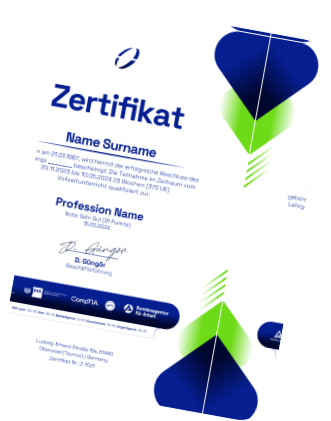
You will receive EASA 147 certificates for each module. After completing 900 hours of practical training, you will also receive a graduation diploma and an official participation certificate from the EASA 147 training school.
Yes, employment support is provided at Eurostar Aviation GmbH or partner companies.
The EASA license is a type of international license valid throughout Europe and in many other countries.

Do you have questions about the course content, job opportunities, certification process, or financing options? Let's schedule just a 10-minute call to answer all your questions and find the best path for you together!

 Apply Now
 Requirements
